
On Contact and patience
There are two ideas that matter more than anything else when making chicken stock: slow simmering and contact.
Contact simply means surface area. Lots of small pieces of chicken expose more bone, skin, and connective tissue to the water than one large piece ever could. It’s why wings, backs, and frames make better stock than a single breast. The water has more to work with.
The second idea—patience—is just as important. Stock isn’t rushed. It’s coaxed.
How Rosemary makes it
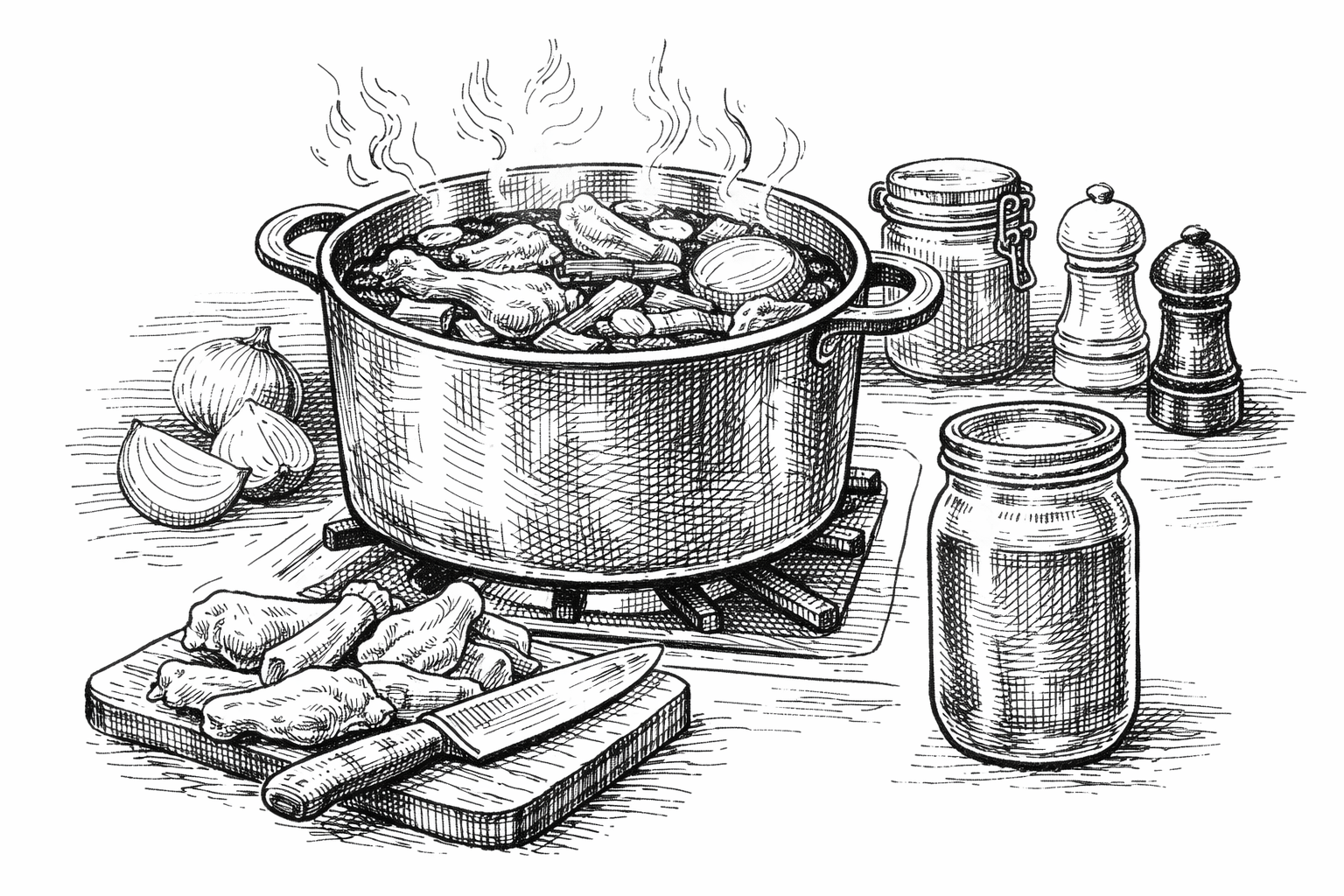
Rosemary’s chicken stock is wonderfully straightforward. A kilo of chicken wings goes into a large pot with a couple of onions, sliced, some celery, chopped, garlic and bay leaves, perhaps thyme, carrots and parsley or other things in the fridge (not braschias) and maybe two litres of cold water, just enough to cover.
Nothing is browned. Nothing is hurried.
The pot is brought very slowly to a simmer and kept there—barely moving—for 2-4 hours. During that time the wings slowly release their collagen, giving the stock body as well as flavour. It’s what makes the finished liquid feel rich on the tongue, even before it’s seasoned.
Once strained, the stock is clear, deeply savoury, and naturally high in protein.
Why wings matter
Chicken wings are almost all joints, skin, and connective tissue. That’s exactly what you want. As they simmer, collagen dissolves into gelatin, which is what gives good stock its satisfying mouthfeel and the way it sets slightly when chilled.
It’s not about intensity. It’s about structure.
How it’s used
This is a stock that carries dishes rather than sitting behind them.
It’s good in soups and stews, of course, but it’s just as useful in smaller amounts—used to cook rice, loosen a sauce, or add substance to vegetables without making them taste overtly “chickeny”.
A quiet principle
Like mushroom stock, this is something that improves your cooking almost invisibly. It relies on understanding a couple of simple principles and then letting time do the rest.
Good stock isn’t complicated. It’s attentive.