
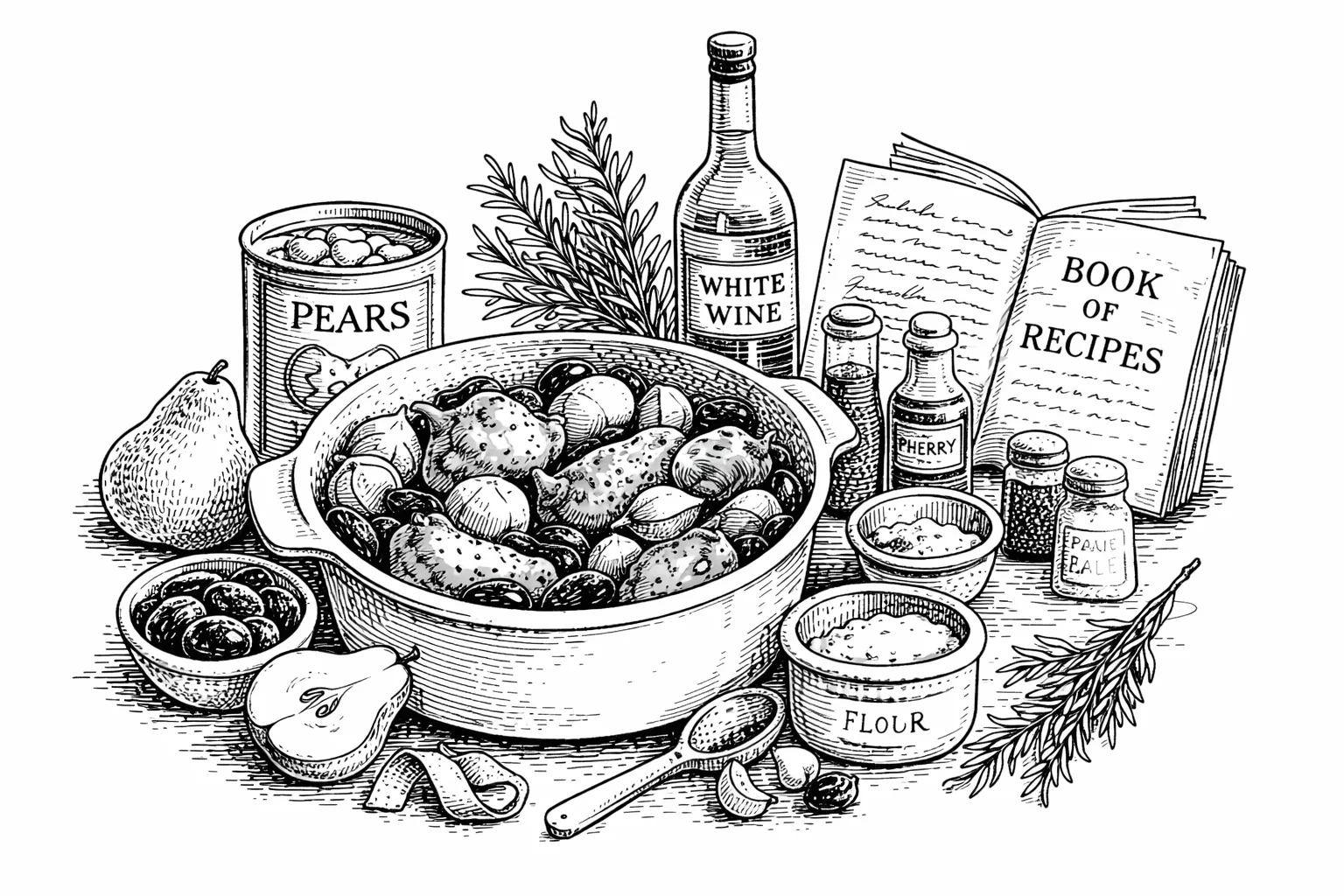
Chicken, Pear and Prune Casserole
"This is a Beaven standby, made zillions of times"
Servings 4 people
Equipment
- Heavy oven-proof casserole must be suitable to fry in
Ingredients
- 800 g chicken boned, cut into pieces
- 200 g prunes
- 3-4 pears peeled, cored and quartered
- lemon peel
- 2 sprigs rosemary
- plain flour use gluten free for GF option
- neutral oil for frying
- salt
- pepper
- ½ cup white wine only if you have it
- 1 tsp soy sauce
- 2 onions small, peeled
- chicken stock or water
Instructions
- Soak the prunes in waster for a couple of hours in water (if you have time)200 g prunes
- Heat the oven to about 170–180°C
- Season some flour with salt and pepper and dredge the chicken pieces in it.plain flour, salt, pepper, 800 g chicken
- Fry them slowly in a heavy-based frypan until nicely browned — don’t rush this.neutral oil
- Put the chicken into a casserole dish. Add the soaked prunes (with their soaking water), the pears (plus the juice if using tinned), the lemon peel, whole peeled onions, and the rosemary.200 g prunes, 3-4 pears, lemon peel, 2 sprigs rosemary, 2 onions
- Pour over the white wine, if using, and soy sauce. Top up with chicken stock or water so the contents are almost covered with liquid.1 tsp soy sauce, chicken stock, ½ cup white wine
- Cover and cook in a moderate oven (about 170–180°C / 350°F) for roughly 1½ hours, or until the chicken is very tender and the sauce has thickened slightly.
- Check seasoning before serving.
- Serve with rice, mashed potatoes, or whatever suits the day.
Notes
This is one of those dishes that improves if left alone. It reheats beautifully and is even better the next day, when the fruit has melted into the sauce and everything tastes more itself.
A note on fruit and chicken casseroles
Today, mixing fruit with chicken might seem like a quirky trend from the 1970s, much like fondue sets and brown glass. However, back then, it was a common and practical choice.
After World War 2, home cooks in Australia and New Zealand often used European-style braising, adapted for everyday needs. In French, Spanish, and North African cooking, prunes, pears, apples, and apricots had been paired with meat for a long time, adding body, sweetness, and acidity to slow-cooked meals. At home, dried or canned fruit was a dependable, affordable option that was always in season.
Chicken, in particular, worked well with fruit. Because it was leaner than traditional cuts of meat, it could become dry if cooked too long. Adding fruit made the sauce smoother, balanced out the sharp flavors from wine or lemon peel, and gave the dish a rich taste without needing cream or butter.
Tags: