
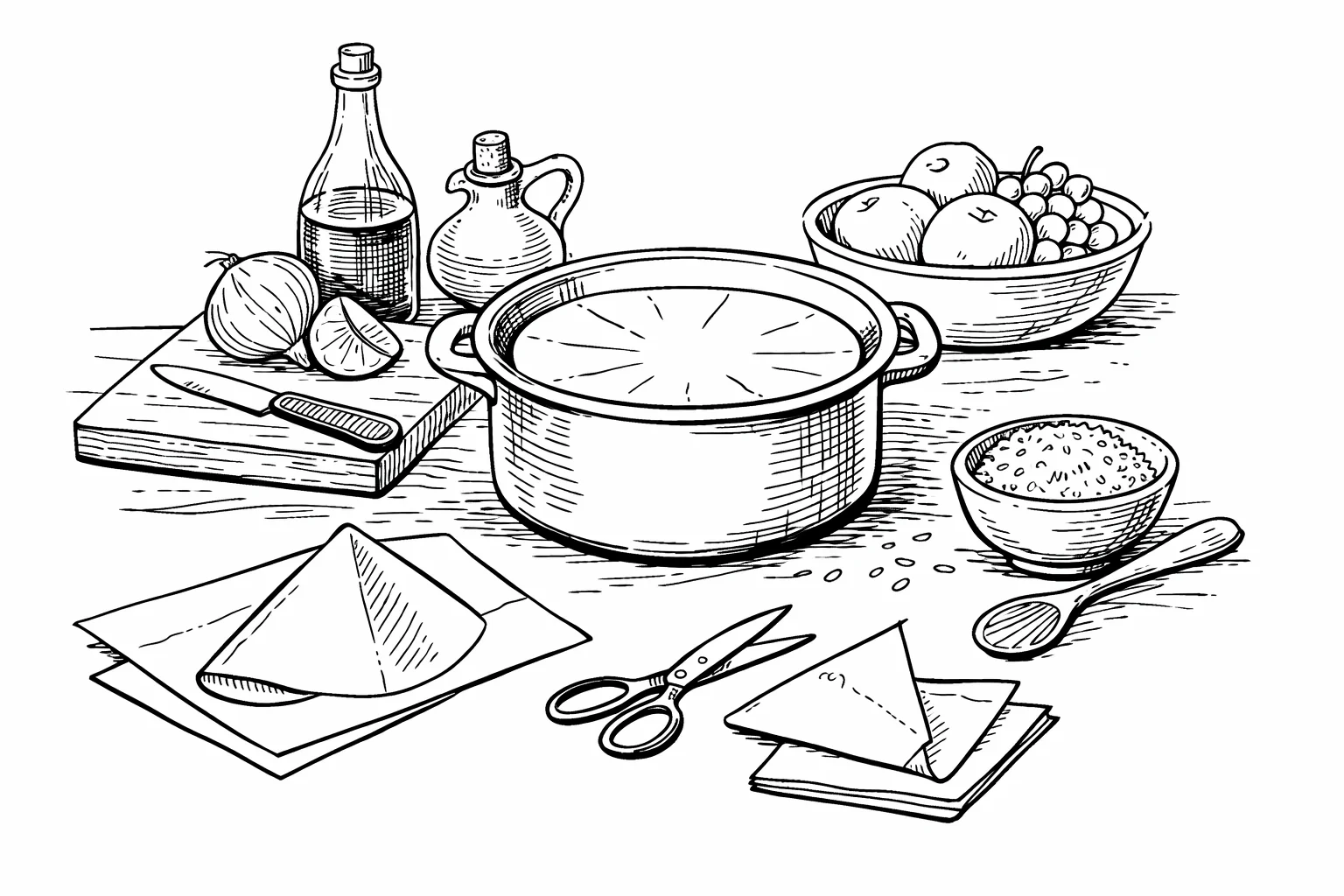
A cartouche might sound fancy, but it’s actually a simple kitchen technique. It’s just a circle of baking paper, cut to fit your dish, and placed right on top of the food as it cooks.
The term comes from French classical cooking, where a cartouche helped control evaporation and protect delicate foods while they cook. It’s similar to the wooden simmer lids used in Japanese cooking.
It’s easy to make one. Cut a square of baking paper a bit bigger than your pan. Fold it in half diagonally, then fold it again a couple more times. Hold it over the center of your dish to see where to trim it so it fits inside. Cut it to size, open it up, and lay it right on the food.
What a cartouche does
A cartouche rests right on the food. Unlike a lid or foil, it lets some steam out but still protects the surface from direct heat. This helps food cook more evenly and gives it a better texture.
Depending on what you’re making, a cartouche can:
- Prevent a skin from forming on custards, creams, and sauces.
- Stop fruit or vegetables from browning or drying out.
- Help control heat during long, slow cooking
- Keep the tops of baked goods from getting too dark
Typical uses in the kitchen
Custards and creams
When you make crème pâtissière, lemon curd, or baked custards, putting a cartouche right on the surface stops a skin from forming as it cools. This keeps the texture smooth and even.
Braising and stewing
In French and Italian cooking, a cartouche often replaces a tight lid when braising vegetables, meat, or beans. It helps keep everything under the liquid, lets some steam out, and builds flavor without drying things out.
Rice and grains
You can put a cartouche over rice or lentils as they simmer. It helps them cook evenly and soak up liquid without the top drying out or cracking.
Baking
I use a cartouche to keep the top of a custard fruit cake from burning. The cake is dense, moist, and takes a long time to bake. Without the cartouche, the top would brown before the center is done.